In every Hindu home and temple, fragrance plays a powerful role in creating a spiritual environment. Two of the most commonly used sacred items are camphor and dhoop. The debate around camphor vs. dhoop often comes down to tradition, purpose, and personal preference.
Both are essential in pooja rituals, yet they serve slightly different spiritual and practical roles. If you want to create a peaceful, divine space at home, understanding the difference can help you choose the right product.
In this guide, we will explore everything about Camphor vs. Dhoop, including benefits, uses, symbolism, and which one is best for your daily prayers.
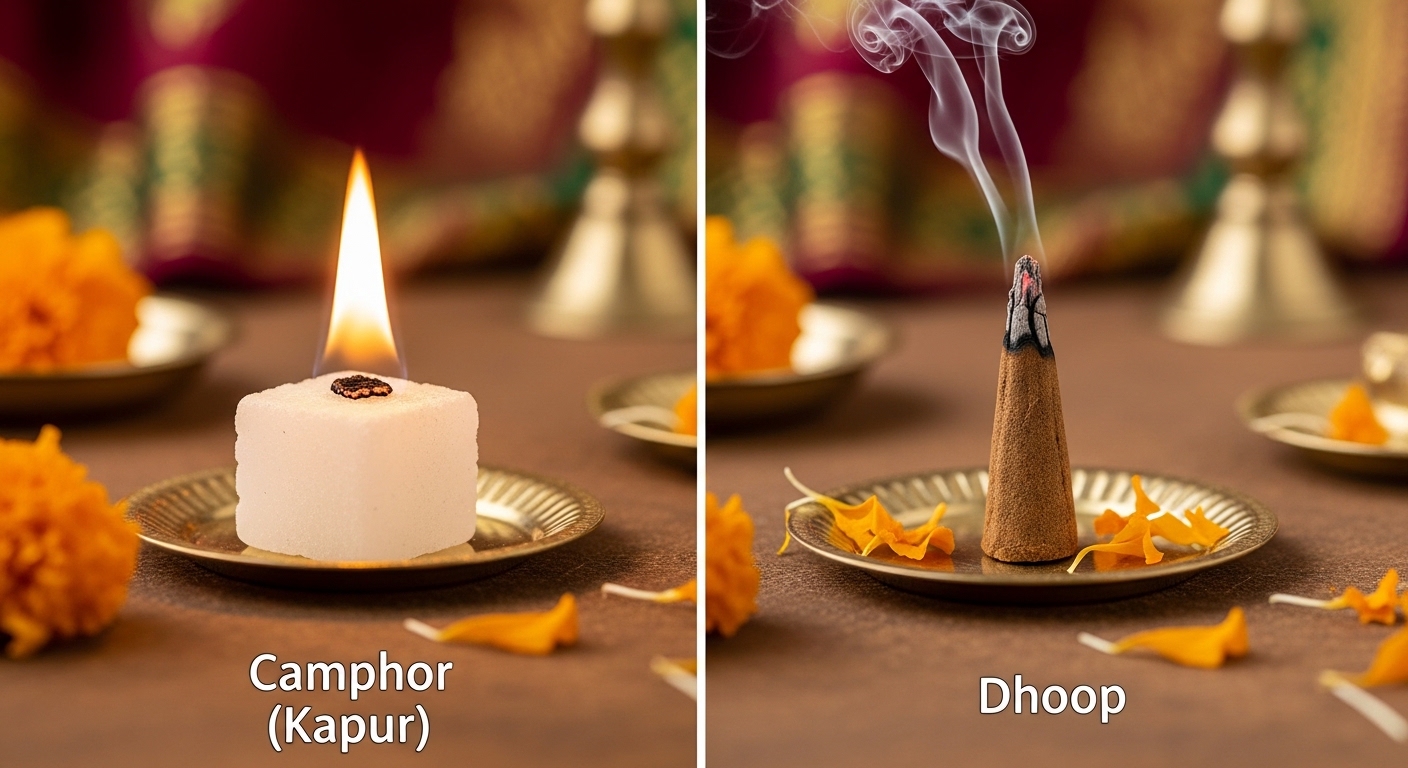
Camphor, commonly called Kapoor in India, is a white crystalline substance known for its strong aroma and clean-burning properties. It is widely used in Hindu rituals, especially during aarti.
When camphor burns, it leaves no residue, symbolizing complete surrender to the divine
Burning camphor represents:
Many households prefer camphor for morning and evening aarti, making it a daily pooja essential.
Dhoop is a type of incense made using herbs, resins, essential oils, and natural powders. Unlike agarbatti, dhoop is thicker and produces a stronger fragrance with dense smoke.
It has been used in temples for centuries to create a sacred environment
Dhoop symbolizes:
Thicker than incense sticks and produce a deeper aroma.
Burn slowly and release concentrated fragrance.
Traditional temple-style resin fragrance used for purification.
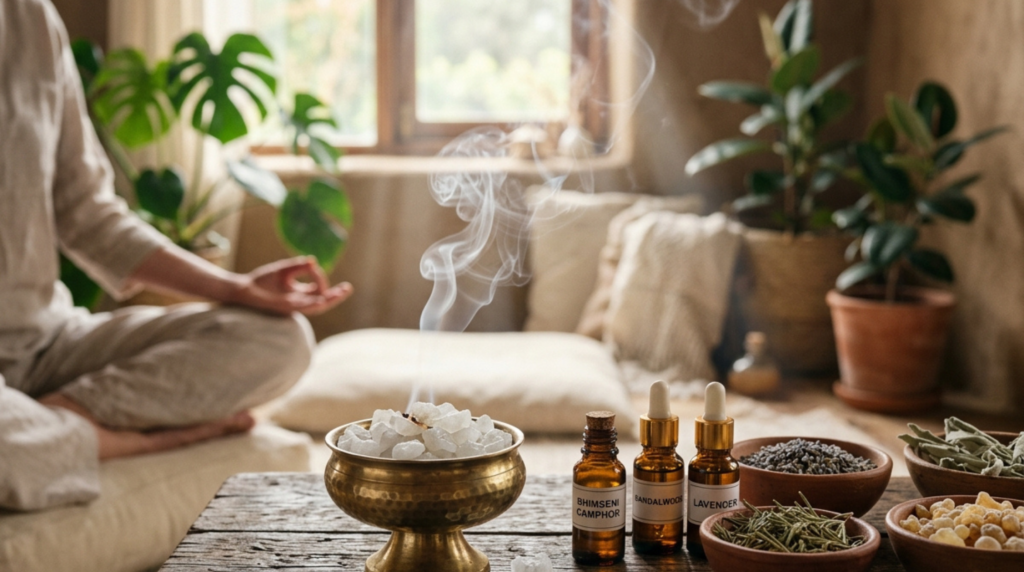
Dhoop and sambrani are traditional incense forms used in temples and homes.
Camphor flame symbolizes offering oneself to the divine.
Used during Diwali, Navratri, and temple ceremonies.
Many people burn camphor in the evening to cleanse the home.
Camphor helps create a calm spiritual start.
Dhoop creates a long-lasting spiritual aroma.
If you want your home temple to smell divine, dhoop is ideal.
The fragrance helps maintain focus and peace.
Perfect for pooja gatherings and religious functions.
Yes, and many traditional households do exactly that.
This combination creates a complete spiritual experience.
Not all pooja products are the same. High quality materials make a noticeable difference.
Premium pooja products enhance both devotion and atmosphere.
You can explore authentic pooja essentials at
https://bhavanipooja.com/
Fragrance has been part of spiritual traditions for thousands of years.
According to traditional practices and studies on aromatics, scent can influence mood, calm the mind, and deepen focus. You can learn more about aromatic substances here:
https://en.wikipedia.org/wiki/Incense
That is why products like camphor, dhoop, and agarbatti remain essential in homes and temples.
Artificial camphor may produce unpleasant smoke.
Cheap incense can contain chemicals that ruin the experience.
A small amount is enough to create a divine environment.
Always allow gentle airflow during pooja.
Many people today are returning to traditional pooja materials because they:
Brands focused on spiritual quality, like Bhavani Pooja, aim to keep these traditions alive with carefully crafted products.
The truth is that Camphor vs. Dhoop is not really a competition. Each serves a unique purpose in spiritual rituals.
Choose Camphor if you want:
Choose Dhoop if you want:
For the most powerful spiritual experience, using both together is the ideal choice.
If you are looking for high-quality pooja essentials, explore trusted products at Bhavani Pooja and transform your daily prayers into a divine ritual.
Both serve different purposes. Camphor is used mainly for aarti, while dhoop is used to spread fragrance and purify the environment.
Yes. Many households burn camphor every morning or evening during prayer.
Yes. Dhoop usually produces a stronger fragrance and thicker smoke than regular incense sticks.
Dhoop is often preferred because it creates a calming aromatic atmosphere that helps concentration.
Natural camphor used in small amounts for pooja is generally safe and commonly used in temples and homes.
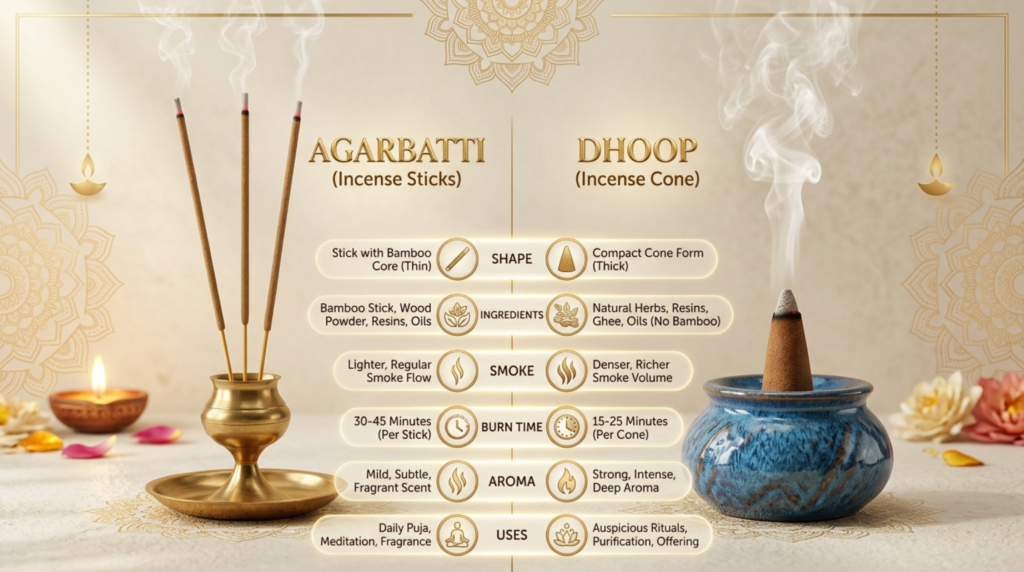
Difference Between Agarbatti and Dhoop If you’ve ever shopped for pooja essentials, you’ve likely come across both agarbatti and dhoop.…
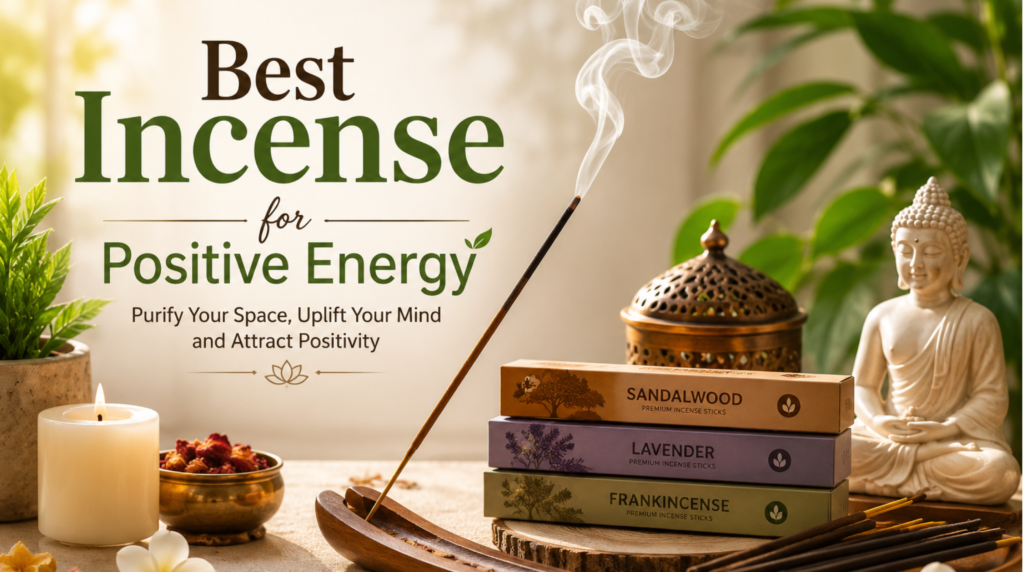
Best Incense for Positive Energy Have you ever walked into a room and instantly felt calm, peaceful, and refreshed? The…
Difference Between Camphor Tablets and Bhimseni Camphor If you’ve ever purchased camphor for pooja or spiritual rituals, you’ve probably wondered…
WhatsApp us